Hoop - Make new friends
- 4.0
- Rating
- 10.00M
- Installs
- Free
- Price

 Analysis by App-foxy
I tried Hoop as a social app for meeting people beyond my existing circle, and my first impression was that it works best when you treat it as a discovery tool rather than a complete friendship platform. Its purpose is simple: browse people, show interest, and start conversations with users who seem compatible. That simplicity makes it approachable, but it also means the quality of your experience depends heavily on how carefully you choose contacts and how much effort you put into turning a quick connection into a real conversation.
The app is published by Hoop app and sits in the social category. It is free to download, with optional purchases ranging from $0.49 to $54.99 per item. The audience rating is Teen, which is important because the service is designed around meeting people online, not just passively consuming posts. I would not recommend using it casually without thinking about privacy, boundaries, and who you are willing to contact.
How Hoop feels in everyday use
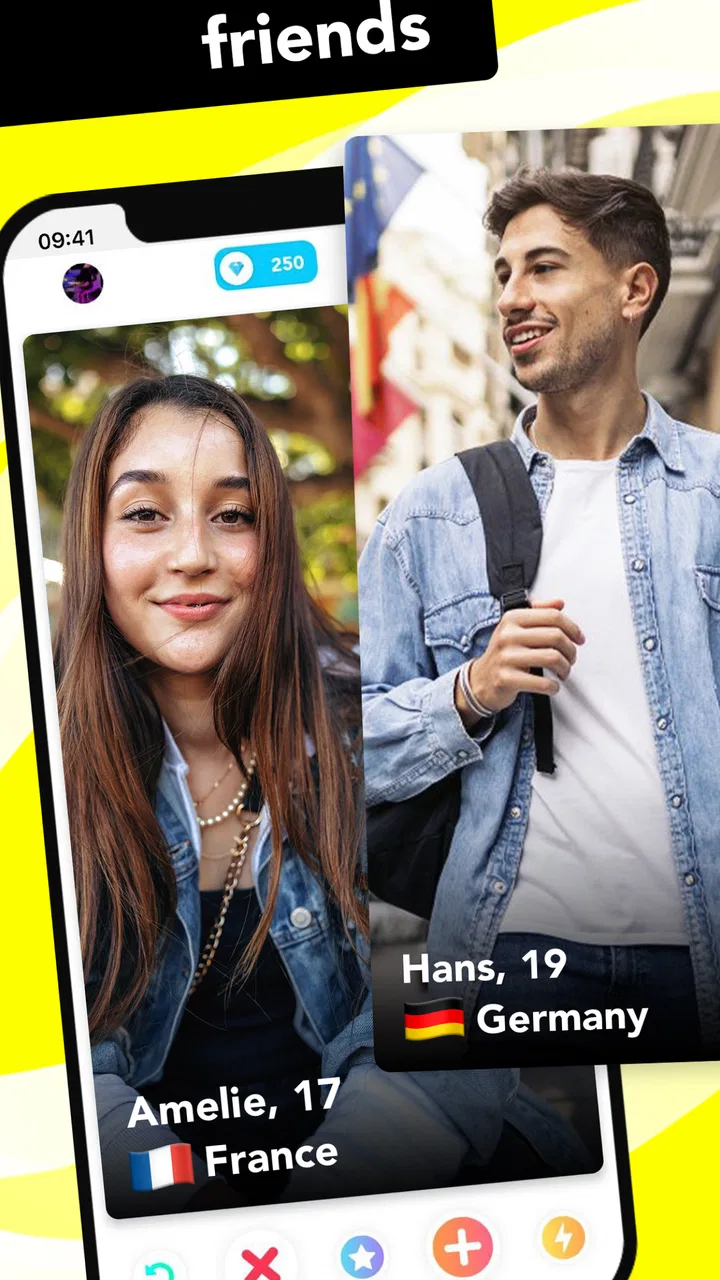
The central idea is easy to understand. Instead of waiting for friendship to happen through a school, workplace, hobby group, or local event, you can use the app to discover people from different places. That makes it especially appealing when your usual social options feel limited. I can see the attraction for someone who has moved to a new city, started studying remotely, wants international friends, or simply enjoys talking with people outside their normal routine.
You May Also Like

 Blood Strike: 2.5 Anniversary
Blood Strike’s Loadouts Turn Every Drop Into a Tactical Gamble
A close look at Blood Strike’s custom loadouts: how fast access to signature weapons reshapes its battle royale rhythm, rewards preparation, and narrows the gap between fights.

 Pandora - Music & Podcasts
Pandora’s Music Is Easy to Start, but Harder to Recover
Pandora’s strength is its low-effort path from a seed to a station. Its weak spot is how much confidence it asks you to place in connection, setup, and quiet recovery.

 8 Ball Pool
 Is Built on Rivalries, Rematches, and Routine
A close look at the rivalries, rematches, shared routines, and unanswered safety questions that turn a quick pool match into a persistent mobile community.

 Samsung Music
’s Quiet Strength Is Playing What You Already Own
Its reach comes less from spectacle than from dependable access to a personal library. That simplicity is both the app’s strongest retention engine and its ceiling.

 AccuWeather: Weather Radar
AccuWeather Review: A Quick, Clear Forecast for Everyday Decisions
For everyday plans, the best forecast is the one you can understand quickly. AccuWeather makes rain timing, radar, and local conditions easy to act on, with a few trade-offs.

 Hill Climb Racing
Why Hill Climb Racing Still Turns Crashes Into One More Run
A tiny car, a bumpy hill and one more upgrade: Hill Climb Racing keeps resurfacing because its simple chaos makes every near-miss feel personal.
More From Our News Desk



What I like about this approach is that it lowers the awkwardness of making the first move. You are not forced to walk into a room full of strangers or invent an opening line at a public event. The app gives you a structured starting point. That does not guarantee a meaningful friendship, but it can make the first step feel less intimidating.
At the same time, Hoop is not a replacement for every kind of social app. It is more focused on meeting new people than on following creators, sharing polished updates, or participating in long-running topic communities. If your main goal is to discuss photography, gaming, books, or local events with a stable group, a dedicated community platform may be a better fit. Hoop is more useful when the person matters more than the subject.
The first decision is how open you want to be
One practical lesson I learned is that a broad profile can attract more attention, but a specific profile usually creates better conversations. A short note about your interests, preferred languages, favorite games, music, or the kind of friendship you want gives other people something concrete to respond to. A profile that says almost nothing may still receive interest, but it makes the next step feel random.
I would also avoid treating every connection as equally promising. A quick interaction is only an invitation to learn more, not evidence that you have found a close friend. I found it more useful to look for small signs of compatibility: similar communication habits, overlapping interests, and a willingness to ask questions instead of only sending short replies.
For example, imagine using Hoop after moving for a new job. You could spend a few minutes looking for people who enjoy the same kind of music or live in places you know. Rather than sending a generic greeting to everyone, you might mention one shared interest and ask an easy, open question. If the conversation develops naturally, you can continue it at a comfortable pace. If the replies remain vague or one-sided, there is little reason to keep investing time.
Why the international angle is useful
The worldwide nature of the service is one of its strongest reasons to exist. Traditional friendship apps can feel very local, while ordinary messaging apps usually depend on already knowing someone’s username or phone number. Hoop sits between those models: it helps you find unfamiliar people, but it still leaves the conversation in your hands.
That can be valuable for language practice and cultural exchange. I would use it to find someone who is comfortable discussing everyday life, films, food, or travel rather than approaching every conversation as a formal language lesson. The best exchanges tend to be mutual. You help each other practice, compare experiences, and correct misunderstandings without turning the chat into an exam.
There is a trade-off, though. International connections can be exciting, but differences in time zones, humor, expectations, and communication style can make conversations fade quickly. A person who seems enthusiastic one day may be unavailable the next simply because their schedule is completely different. That is not necessarily a flaw in the app, but it is something to expect before assuming that every promising contact will become a regular friend.
What has changed in the current version
The current version is 6.9.0, which suggests that Hoop is an established product rather than a newly tested idea. It was released on May 15, 2019, and has had time to develop beyond its original launch. The service now has more than 10 million installs, with an average rating of 4.0 from around 420 thousand ratings. Those figures indicate a substantial audience, although popularity alone does not tell you whether every interaction will be worthwhile.
From a user’s perspective, the most important effect of that maturity is the possibility of a larger pool of people to discover. A social app becomes more useful when there are enough active users with different interests and schedules. A larger network can improve variety, but it can also make the experience feel less personal. You may need to filter more carefully instead of assuming that a high number of available profiles means a high number of good matches.
The app has also accumulated around 19 thousand written reviews, which gives it a visible history of user reaction. I would read those comments with some caution. Social products are particularly sensitive to location, age, expectations, and the quality of the current user base. Someone looking for quick casual chats may judge the app very differently from someone hoping to build a long-term friendship.
The free entry point remains important. You can try the basic experience without committing money, while optional purchases are available inside the app. I would recommend using the free version long enough to understand whether the people, pace, and conversation style suit you before considering any purchase. Paying cannot create chemistry with another person, and it should not be treated as a shortcut around the basic work of starting a respectful conversation.
How the evolution affects existing users
People who have used Hoop for a long time may notice a different social atmosphere as the audience grows. More users can mean more chances to find someone with a rare interest, but it can also mean more inactive profiles, brief interactions, and messages that never develop. In a mature social network, the challenge often shifts from finding anyone to finding the right few people.
That is why I would periodically refresh my own profile instead of leaving it unchanged for months. A current profile gives new contacts a better idea of who I am now. I would also remove interests that no longer represent me and make my expectations clear without sounding demanding. This small maintenance step can improve the quality of conversations more than simply sending more requests.
Existing users should also be realistic about continuity. A connection made through a discovery app may remain casual, move to another messaging service, or end without explanation. I do not see that as a reason to avoid Hoop, but I do think it helps to avoid measuring success only by the number of contacts. One thoughtful, reliable conversation can be more valuable than a long list of names.
Using the app without losing control of your privacy
Because the app is built around meeting strangers, I would keep the first conversations deliberately limited. I would not share a home address, school timetable, workplace details, financial information, private documents, or anything that could identify my daily routine. A friendly profile does not need to reveal enough information for someone to locate me offline.
I would also keep the pace under my control. If someone pushes for personal details, insists on moving elsewhere immediately, becomes aggressive after a refusal, or makes the conversation uncomfortable, I would stop replying and use the available safety tools rather than trying to explain myself repeatedly. A social app should make it easy to leave an interaction that no longer feels right.
The Teen content rating makes this especially relevant for younger users and parents. I would not interpret that label as a promise that every conversation is suitable or risk-free. Teen users should understand that online friendliness can be performed, exaggerated, or used to gain trust. Parents may want to discuss privacy and boundaries before allowing use, rather than relying on the age label alone.
Where Hoop still has limits
The biggest weakness is the gap between making contact and building friendship. The app can help with discovery, but it cannot solve the harder parts: maintaining a conversation, handling different expectations, and finding a rhythm that works for both people. If you want instant, dependable companionship, Hoop may feel disappointing because many connections naturally remain brief.
Another limitation is that the experience may reward quick impressions. When people are deciding whom to contact from a stream of possibilities, a profile can be judged in seconds. That encourages users to present a neat summary of themselves, but real compatibility is more complicated. Someone with an attractive profile may not communicate well, while a quieter profile may belong to a genuinely interesting person.
I also think the social format can become tiring. Browsing unfamiliar people, deciding whom to approach, and restarting conversations after they fade requires attention. If you already feel overwhelmed by notifications or social choices, adding another stream of potential contacts may create more work rather than more connection. In that situation, a smaller group chat or an offline activity based on a shared hobby could be healthier.
The optional purchase system is another point to consider. The range from $0.49 to $54.99 per item is wide enough that I would check each purchase carefully and avoid spending impulsively. I would judge the app by the quality of its free experience first. If the basic version does not help you meet people you genuinely want to talk with, buying extras is unlikely to fix the underlying problem.
When another social option makes more sense
I would choose Hoop over a conventional social network when my priority was meeting unfamiliar people rather than keeping up with existing friends. I would also choose it over a local-only service if I wanted international conversations. Its focused purpose makes the first step clearer than opening a general messaging app and hoping to find a community.
However, I would choose a hobby forum, group chat, or event platform when I wanted repeated interaction around a specific subject. Shared activities create natural conversation, and they give people a reason to return even when friendship develops slowly. I would also prefer a more structured language-exchange service if my only goal were studying a language with clear learning tools and practice routines.
For dating, I would use a service designed specifically for dating rather than assuming that every new connection in Hoop has romantic potential. Keeping those purposes separate makes expectations clearer and reduces the chance of an uncomfortable misunderstanding. Hoop is most convincing when used for open-ended friendship and cultural exchange.
Who should try it, and who should skip it
I think Hoop is a good match for curious, patient users who enjoy starting conversations with people from different backgrounds. It is particularly suitable if you have recently moved, spend much of your time online, want to practice social confidence, or are interested in hearing how ordinary life differs elsewhere. The free access makes it easy to test without a financial commitment.
I would be more cautious if you dislike uncertain conversations, expect every contact to reply quickly, or find it difficult to disengage from people who make you uncomfortable. The app requires judgment and boundaries. It is not ideal for someone looking for a tightly moderated professional network, a specialized interest community, or guaranteed local friendships.
You should also skip it if you are mainly seeking a passive entertainment feed. Hoop asks you to participate. The value comes from choosing people thoughtfully, writing something personal, and following up when the exchange feels promising. If that sounds like effort rather than enjoyment, another type of app will probably serve you better.
My final view after using it
Hoop succeeds at making the first step toward an international friendship feel accessible. Its established audience, free starting point, and straightforward social purpose give it a reasonable place among apps for meeting new people. I especially like it for users who want to move beyond their immediate circle and are willing to accept that meaningful connections take time.
My recommendation comes with a clear condition: use it as a doorway, not as proof that friendship has already happened. Keep your profile informative but private, begin with low-pressure questions, and judge conversations by consistency and respect rather than excitement during the first few messages. Those habits matter more than any optional purchase.
The current release shows a product that has continued beyond its original launch, but the central experience still depends on the people you encounter and the choices you make. I would try it free, keep expectations realistic, and leave quickly when an interaction feels wrong. For the right user, the strongest feature is the chance to discover a genuinely different perspective; for the wrong user, the constant uncertainty may outweigh that benefit.
Overall, I would recommend Hoop to a friend who wants to meet people worldwide and is comfortable putting in patient, careful effort. I would not recommend it as a guaranteed solution for loneliness or as a substitute for real-world communities. Its future appeal will depend on whether the growing audience continues to produce thoughtful conversations rather than only more profiles to browse. For now, it is a useful starting point, provided you remain selective, respectful, and in control.
FAQs for Hoop - Make new friends
01What is Hoop and how does it work?
Hoop is a social networking app designed to help users make new friends by connecting them with people from around the world. The app integrates with Snapchat, allowing users to find and chat with potential friends. Users can browse profiles, send a request to connect, and start conversations once the connection is accepted.
02Is Hoop safe for teenagers to use?
Hoop is designed with safety in mind, especially for younger users. The app includes features such as reporting and blocking to help protect users. However, it's important for parents to monitor their children's usage and educate them about online safety. Hoop also complies with age restrictions to ensure a safer environment.
03How does Hoop maintain user privacy?
Hoop prioritizes user privacy by allowing individuals to control what information they share. Personal details are not displayed on the platform, and users connect through Snapchat, which adds an extra layer of privacy. Users should review the app’s privacy policy to understand how data is handled and stored.
04Are there any in-app purchases or subscription fees on Hoop?
Hoop is free to download and use, but it does offer in-app purchases. These purchases can enhance user experience by providing additional features or boosting visibility. Users can choose to buy 'diamonds' to send more requests or unlock premium features, but the core functionalities are accessible without payment.
05Can I use Hoop without a Snapchat account?
No, Hoop requires a Snapchat account to function. The app is built to connect users through their Snapchat profiles, which means you need to have an active Snapchat account to use Hoop. This integration is a key feature that helps facilitate easy and quick connections among users.
Pros
- Easy-to-use interface for quick navigation.
- Connects with Snapchat for seamless integration.
- Diverse community with global reach.
- Enhanced privacy settings to protect user data.
- Fun swipe feature to discover profiles.
Cons
- Limited free features require in-app purchases.
- Occasional bugs can disrupt user experience.
- High data usage could affect mobile plans.
- Notifications can become overwhelming.
- Profile verification could be more robust.

Hoop - Make new friends
Gallery